This is a Test: The CPSC Webinar

Because this is the 21st Century, I figured I should try more than one media. Below is the recording of a webinar I conducted with my colleague Chuck Joern.


Consumer Products and Import Requirements from Barnes Global Trade on Vimeo.
| | | | Devamı » 3 Mart 2017 Cuma Unknown 0 yorum

Ruling of the Week 2017.5: Copper Scrap

There are a number of Chapter 98 tariff items that permit partial duty exemptions for items of the United States that are sent abroad and returned to the United States. Given the current trade rhetoric, it might be worth explaining why that is the case. After all, why give a benefit to companies that send goods abroad for further processing? The short answer is that the duty exemption encourages the use of U.S. origin materials in manufacturing abroad. After all, if there is going to be manufacturing abroad, the U.S. should encourage that it take advantage of U.S.-origin components and materials. The alternative is to manufacture abroad entirely from foreign components.

The HTSUS item at issue in HQ H281950 (Jan. 26, 2017) 9802.00.60, which provides a partial duty exemption for:
Any article of metal (as defined in U.S. note 3(e) of this subchapter) manufactured in the United States or subjected to a process of manufacture in the United States, if exported for further processing, and if the exported article as processed outside the United States, or the article which results from the processing outside the United States, is returned to the United States for further processing . . . .
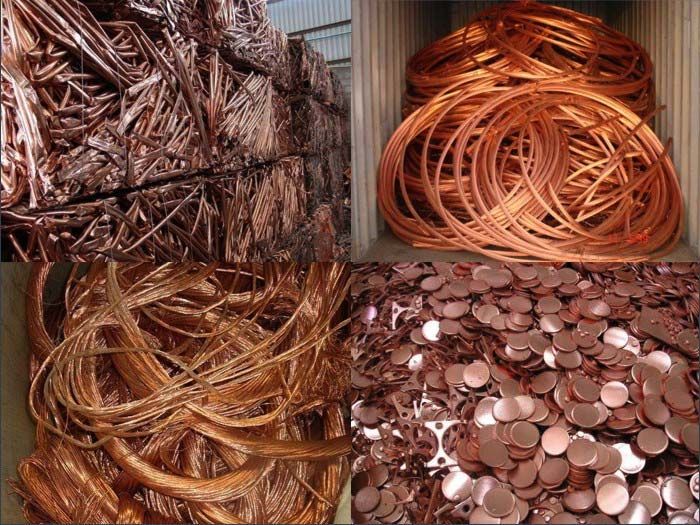
To qualify, the metal article must be manufactured in the United States. The question presented in this ruling is whether scrap metal collected from industrial production in the U.S. is "manufactured in the United States." The scrap metal at issue here is copper. The question is potentially complicated by the fact that some of the original copper was domestic in origin while some was originally foreign. Some of the scrap will be derived from production processes. Some will just be collected in the form of obsolete U.S-origin wire.

From exportindia.com


 The tariff does not define "manufactured" in this context. In prior rulings, CBP has held that metal is manufactured when it is subject to operations such as "splitting, annealing, milling, rolling, brushing, and leveling." Here, the industrial scap results from the application of those manufacturing processes to copper. As a result, Customs held that the scrap was also manufactured in the U.S.

Customs has also held that the process of making metal into U.S.-origin products is sufficient manufacturing to allow used, obsolete products to be considered manufactured in the U.S. [Note: I realize that seems self-evident, but that's the fact of the matter.]

Consequently, in this case, all of the goods, when re-entering the U.S. after further processing abroad, qualify for the partial duty exemption. There are, of course, documentation requirements. If you are going to try this, look at 19 C.F.R. 10.9.


| | | Devamı » 5 Şubat 2017 Pazar Unknown 0 yorum

Ruling of the Week 2017.2: Emergency War Material Covers Failed NAFTA Claim

I like this ruling. It is HQ H273101 (Nov. 4, 2016).

This is a case where the importer made a NAFTA claim. When asked by Customs and Border Protection, the importer either could not or just did not support the claim. It happens. Sometimes, subsequent review turns up a problem with the NAFTA documentation. Sometimes, the broker should not have made the claim to start with. Lots of things happen in the real world.

This particular product is a multi-sensor electro-optical surveillance and targeting turret from Canada. As you might imagine, a multi-sensor electro-optical surveillance and targeting turret is a piece of military equipment. When the NAFTA claim failed, the importer asserted that the merchandise is entitled to duty-free entry as war material certified as such by a military procuring agency under HTSUS item 9808.00.30. It submitted the necessary certificates.

Customs liquidated the entry at the applicable 4.5% rate of duty and the importer protested. Customs granted the protest. It noted that in the absence of willful negligence or fraudulent intent, the importer can, prior to liquidation, submit documents to support a claim for free or reduced duties. The regulation that supports this is 19 CFR 10.112. Note that the regulation allows for the documents to be submitted even after liquidation but before the liquidation is final. That is a narrow window of 90 days following liquidation. See 19 USC 1501.

Why do I like this rulings? It is not just because the importer won. It is also because the importer, or its counsel, took a step back from a problem, surveyed its options, and found a creative solution. I also like it because it reaffirms for importers and brokers that the filing of the entry is not necessarily the end of the process. If there is a better option or a way to reduce duties after the entry summary has been filed, go ahead and submit the appropriate documents. There is money to be saved, go save it.
| | | | | Devamı » 13 Ocak 2017 Cuma Unknown 0 yorum

Substantial Transformation Redux


Note: I am writing this post while on vacation at an undisclosed location. The Internet here is lousy. I am paying a fair amount of money for "high speed access." Despite that, I feel like I am working on a vintage 3600 baud dial-up modem. Consequently, you will have to make do with two links. I might go back and fill in more when I have a decent connection.
We just talked about a Customs and Border Protection ruling in which I complained about CBP straying from the traditional substantial transformation test of looking for a change in name, character, or use to determine country of origin. Now we run up against Energizer Battery, Inc. v.United States, in which the Court of International Trade addressed essentially the same question. The CIT started out strong and raised my expectations that we would see a very detailed analysis of the test. We did get a thorough and logical opinion. But, I still have some concerns. So, let’s walk through this.

Under the Buy America portion of the Trade Agreements Act of 1979, 19 USC §§ 2511-2518, the U.S. government can procure material from countries covered by the Act. Those are countries that have signed on to the WTO Government Procurement Agreement and U.S.-free trade agreement partners. China is not an eligible country.

The case involves a flashlight assembled in Vermont. Virtually all of the approximately 50 components, including the light-emitting LED’s, the lens assembly, and wires that are pre-cut to size, come from China. After importation, the assembly process involves workers at two stations and takes approximately 7 minutes and 10 seconds. The value of imported materials is $12.96 and the finished cost of the flashlight is $23.55.

The only way to make these flashlights eligible for government procurement is to determined that they are products of the United States by virtue of the assembly operation in Vermont. That requires a substantial transformation. The test for a substantial transformation under the Trade Agreements Act is that the product is “a new and different article of commerce with a name, character, or use distinct from that of the article or articles from which it was transformed.” While there have been few cases applying this test in the context of the procurement agreement, this is the well-established test used for non-NAFTA country of origin marking, some drawback, and for other purposes.

Energizer sought a final ruling from Customs on whether the assembly of the flashlights in the U.S. resulted in a substantial transformation. Customs found that after assembly in the U.S., the LED’s continue to perform their intended function of emitting light and that the assembly process was not complex or time-consuming. Customs also noted the traditional name, character, or use test. Based on its analysis, Customs found no substantial transformation.

The first issue the plaintiff raised is that Customs’ focus on the LED’s and “essential character” is not part of the test for substantial transformation. That is manifestly true. The statute does not reference essential character. The Court, however, noted that it must decide the origin of the flashlight on its own, based on the evidence presented to it. The original analysis CBP performed is, therefore, of limited importance.

Given my most recent post on this question, I was very happy to see the Court of International Trade focus its attention on the name, character, or use test. The Court went so far as to say the “’essential character’ is not an established factor in the substantial transformation analysis, although some courts have looked to the ‘essence’ of a finished article in order to evaluation whether there has been a change in character as a result of post-importation processing.” Essential character is a useful concept for tariff classification. Separately, “essential identity” comes up in the context of U.S. goods returned. Neither is traditionally part of the substantial transformation test. So far, I am happy.

The Court then reviewed the history of the substantial transformation test from its roots in the 1908 Supreme Court decision Anheuser Busch Brewing Ass’n v. United States. Since that time, the test has become “flexible” and the outcome depends on the facts of each case.

The Court noted that a change in name is generally the least compelling evidence of a substantial transformation. That said, let’s keep in mind that the imported components were not called “flashlights.” They were LED’s, wires, screws, switches, and other components all with their own name.

Regarding name, the Court followed the lead of a prior CIT decision in a case called National Hand Tool v. United States. That case involved hand tools that were partially finished prior to importation and machined, etc. after importation. In all cases, the name of the article as imported remained the same as that article in the completed tool. From this, the CIT held that the question is whether the imported components retain their names after assembly into the flashlight. The switch, for example, remains the switch even when it is fully incorporated into the flashlight.

Moving on to character, the Court looked for a substantial alternation in the characteristics of the components. That requires more than a cosmetic change. Rather, the end-use of the imported product must not be the same as (or “interchangeable with”) the end-use of the product after post-importation processing. Here, the Court found that the shape and material composition of the components was unchanged, meaning there was (according to the Court) no change in character.

The Court also noted that that prior cases have found a substantial transformation less likely where the imported item has an intended end-use and the post-importation processing is consistent with that end-use. This is where I start to get concerned. Here, the parts were all imported for the purpose of manufacturing flashlights. The lens assembly, in particular, had no other apparent use. This does not bode well for Energizer.

Regarding use, Plaintiff argued that none of the imported components are useful as flashlights. The Court rejected that approach and held that the correct inquiry is whether the imported parts have a predetermined end-use at the time of importation. Here, the lens head is partially assembled at the time of importation, with four of the five LED’s attached and pre-cut wires soldered to the circuit board. This, and other components, have pre-determined end-uses as parts of the flashlight. Based on this, the Court found no change in use.

To my way of thinking, the unassembled components of a flashlight do not constitute a flashlight and cannot be used as such. As imported, they mostly have functions that are distinct from the function of a flashlight. A switch makes and breaks an electrical circuit. Wires conduct electricity.

The problem for Energizer is that LED’s emit light and the lens assembly directs light. Those are pretty close to the functions of a flashlight, although they are not sufficient to form a flashlight. Keep that in mind as we go forward.

Next, the Court looked at several subsidiary tests for substantial transformation. The most important of these tests is the nature of the assembly process. When assembly is simple, the question is whether it is “minor manufacturing and combining” as opposed to extensive operations resulting in the loss of identity of the imported component, which becomes an integral part of a new article. Summarizing, the Court stated, “However, when assembly operations were manual and required some ‘skill and dexterity to put components together with a screw driver’ but the names of each article and the form and character of each component remained unchanged, and the use of the imported articles was predetermined at the time of importation, the court did not find that substantial transformation had occurred.” The Court found that the production process constituted simply attaching one component to another. It is not a complex process.

Having found no change in name, character, or use and that the assembly process was not complex, the Court of International Trade held that the flashlight components from China were not substantially transformed by assembly in Vermont. Thus, the Court affirmed the final determination from Customs and Border Protection.

I’m not entirely comfortable with this for a few reasons. First, I need to say that this is a well-reasoned opinion and it is clearly following the lead of National Hand Tools. I think that is admirable for purposes of providing predictability and business certainty.

The problem is that as an advocate, largely for importers, I don’t like the result. It is very hard to apply in practice. It seems to me that this decision makes a substantial transformation in the context of assembly very difficult to establish. Most assembly can be reversed by disassembly. That means a switch will always be a switch and an LED will always be an LED even after assembly. This ignores the name changes from switch and LED to flashlight. Furthermore, the use of components will almost never be the use of the finished article, even when the components are imported specifically for incorporation into that finished product. Under the Court’s analysis, an engine assembled into a car remains an engine and does not change its character because it was intended for use as a car engine. Nor does it change its intended end use. But, an engine is not a car. I cannot drive an engine.

By focusing on the components before and after assembly, I fear the Court has set the bar too high. It seems that substantial transformation will occur when the imported part is subject to further fabrication prior to final assembly. The murkier question is when assembly is sufficiently complex to produce a substantial transformation. That will depend on the facts of the case. Unfortunately, it appears to me that under this analysis the complexity of the assembly process—which is not name, character, or use—is firmly part of the name, character, or use test. That seems to go beyond what was required under the 1979 Trade Agreements Act and similar CBP applications of the test.

| | | | Devamı » 20 Aralık 2016 Salı Unknown 0 yorum

Ford Case Transits to Trial

I've been waiting for a potentially block-buster decision in Ford Motor Co. v. United States, which is pending before the U.S. Court of International Trade. We now have a preliminary decision which is interesting, but is not yet in a position to bust any blocks.

This case is about the tariff classification of imported Ford Transit Connect vehicles made in Turkey. At the time of entry, all Transits have swing-out front doors with windows, second-row sliding doors with windows, and swing-out rear doors, some of which have windows. The imported vehicles also have two rows of seats, rear passenger windows, rear passenger seat belts, child-locks on the rear sliding doors, a rear cup holders in the front console, a full length cloth headliner, coat hooks, and a map pocket in the second row. Starting in 2010, Ford created a "cost reduced" second row seat for use in Transit vans. The second row seats lack headrests, "comfort wires," a tumble lock mechanism and labels. Finally, the rear seats are made of a "cost reduced fabric." There are two trim levels, so the details vary somewhat, but this should be enough detail to convey the point.

Shortly after customs clearance, but while still within the legal confines of the port of entry, the rear seats, rear door windows, and other passenger amenities are removed to convert the vehicles to the small cargo vans you probably see every day. They look like this:

There are passenger wagon versions of the Transit, but the case only involves vehicles that are ultimately delivered as cargo vans.

Why would Ford go to all this effort? Because in the 1960's, the US got into a spat with Europe over its duties on chicken imports from the US. In retaliation, the US imposed a 25% duty on trucks. That duty remains on the books today and is called "the Chicken Tax." The duty on cars for the transport of persons is, on the other hand, just 2.5%. That difference makes it worthwhile for Ford to import tall passenger cars and, after importation, convert them to trucks, saving 22.5%. That, ladies and gentlemen, is an example of tariff engineering. Or, as the government contends in this case, it is an impermissible "artifice or disguise" to avoid the correct assessment of customs duties.

Think about all the Transit Connect vehicles you see in the course of a day. I see lots. This is obviously a big deal case for Ford and for Customs and Border Protection. It is also a big deal in general because this case might set the parameters for legally acceptable tariff engineering. That's why it has been closely watched.

The starting point for this analysis is that the classification of an article must be ascertained by examining it in the condition in which it was imported. Processing subsequent to importation is generally not relevant. However, an importer cannot "resort to disguise or artifice" to avoid an applicable duty. That means that if the imported article "is not the article described as dutiable at a specific rate, it does not become dutiable under the description because it has been manufactured or prepared for the express purpose of being imported at a lower rate." The Court of International Trade expressed this as a "bright line test" of "does the article, as imported, fall within the description sought to be applied?"

Thus, if the imported Transit, with reduced cost seats and rear windows is, in fact, classifiable as a passenger car, then it will be classified as such regardless of subsequent modification. That is the important legal conclusion at this point of this case. What the Court is saying is that Ford's motive of reducing duty liability and subsequent processing does not dictate the classification. Rather, if the imported Transit vehicles, which are described as passenger cars, are passenger cars when imported, then Ford will win this case. That is a big deal, if it holds.

To determine whether the Transits are passenger cars, the Court of International Trade started to appy the analysis of a 1994 Federal Circuit case involving early sport-utility vehicles, Marubeni Am. Corp. v. United States. That case set out lots of features that indicate that a vehicle is designed primarily for passenger use or primarily for cargo use.

According to the Court, it has a lot of details about the vehicle as imported and post-conversion. But, it lacks some necessary information about the cost reduced rear seats. The Court believes that the missing information is necessary for it to apply Marubeni and make a final determination in this case. Consequently, the Court denied motions for summary judgment filed by both parties. That means that the parties will have to either present additional evidence, possibly in the form of an agreed set of facts, or the case will have to be decided following a trial on the open questions of fact.

Either way, we don't know the result yet. It appears that if (and I don't know this to be true) the rear seats installed in imported Transits are not adequate for passenger use, Ford may have a a problem. But, it might be that the seats are just awful and at the same time perfectly adequate for passenger use. Although some other facts may be at issue, this seems to be the sticking point. So, we need to wait for a complete result. Obviously, I will keep watching.
| | | | Devamı » 6 Ekim 2016 Perşembe Unknown 0 yorum

Ruling of the Week 2016.15: Customs Business

One of my least favorite areas of customs regulation has to do with the ability of related companies to provide compliance expertise through shared services. The problem arises because while a company can rely on its employees to conduct customs business on its own behalf, no one but a licensed customs broker can engage in customs business on behalf of a third party. That means that if you are an employee of Subsidiary Alpha of Acme Holdings Corp. you can't fully assist your sister company Subsidiary Beta with its customs compliance. That is true even though you may be the most qualified person in the entirely to the Acme Holdings extended family. While there is a space called "corporate compliance" in which the shared services model works just fine, managing the line of acceptable advice is difficult.

The reason for this is 19 USC § 641(b)(1), which requires a valid customs broker's license to undertake customs business on behalf of a third party. Customs business is defined as:


those activities involving transactions with CBP concerning the entry and admissibility of merchandise, its classification and valuation, the payment of duties, taxes, or other charges assessed or collected by CBP on merchandise by reason of its importation, and the refund, rebate, or drawback of those duties, taxes, or other charges. “Customs business” also includes the preparation, and activities relating to the preparation, of documents intended to be filed with CBP in furtherance of any other customs business activity, whether or not signed or field by the preparer. . .

19 CFR § 111.1.

This is relevant at the moment because of HQ H261011 (Jun. 3, 2016) in which the question presented to Customs was whether the use of a single bank account to pay duties on behalf of two related but separately incorporated subsidiaries constitutes customs business. Each entity would have a separate ACH account to sweep payments to Customs, but the funds would come from a consolidated account. Clearly, the banking arrangement involves transactions concerning the payment of duties, taxes, or other charges assessed by CBP. That makes this a non-frivolous question, even though it should be entirely obvious that the account from which the funds are drawn is not indicative of the practice of "customs business."

In prior rulings, CBP has held that a company cannot make payments to CBP on behalf of a sibling company without running afoul of the broker licensing requirement. According to Customs, the arrangement proposed in this case is different because each entity is continuing to pay its own funds on its own behalf. The proposal is internal to the company and not visible to Customs. Further, the subsequent accounting reconciliation between the companies is not a transaction with Customs and does not constitute customs business.

That is a good result and a valuable step. Customs should go further. I realize this may be contrary to the interests of some brokers out there, but keep in mind that it is also contrary to the interests of outside legal counsel. In-house corporate compliance is a reality. Customs' primary interest should be in ensuring that importers have access to the best available compliance resources. Companies may choose to increase those resources if they can be shared among related entities. Today, sharing customs business resources involves fairly complicated steps including employee sharing agreements, employee time management to avoid overlapping times of responsibility, creating licensed brokerage entities, and other schemes.

The problem is that Customs can't do anything about this on its own. The statute is there and Customs must apply it. It is easy enough to say something like "call your congressperson" as a means of encouraging a fix. But, politics being what it is these days, you may as well stand in your cul-de-sac and shout into a storm. Nevertheless, when the political storm clears, this is something that requires congressional attention in a way that continues to support the brokerage community.
| | | Devamı » 27 Haziran 2016 Pazartesi Unknown 0 yorum

Hey, look over there

Dear Lex Luthor,

This is in response to your implied inquiry concerning the importation of a large sample of kryptonite into the United States. You can find my response here, as published by the fine folks over at Law and the Multiverse.

That will be $3 million for service. An itemized invoice may be provided if you so request.

Very sincerely,

Larry Friedman
| | Devamı » 11 Nisan 2016 Pazartesi Unknown 0 yorum

Ruling of the Week 2016.5: Kaboom! Project Management Fees

There used to be a time when I was able to keep this blog up, make each post funny, and occasionally interesting to the customs compliance pros. But, as periodically happens, then I get busy. It turns out that this is week 8 of 2016 and I am about to post ROTW number 5. I am not happy about that. Let's see what we can do to catch up.

Today's ruling is HQ H270670 (Feb. 17, 2016) and continues our focus on value questions. Value is complicated enough to make many compliance professionals quake.

The ruling involves purchases by "The Cereal Company" of premiums or toys. The only Cereal Company I can find online purports to be in Zambia. Thus, my assumption is that the Cereal Company is a pseudonym for an actual cereal company and that these toys are headed into boxes of puffed sugar and artificial color.

This case is honeycombed with players. The Cereal Company buys the toys from suppliers in China. An unrelated third party in the U.S. called Insight Promotions arranges for the toys to be wrapped and performs project management and testing. To save on alpha-bits, I will call that company "Insight." Insight outsources the wrapping to a third company in Canada called Econopac. Consequently, the goods go from China to Econopac in Canada and then to the United States. Econopac does not purchase the goods and does not have title. It invoices Insight for its services.

Insight Promotions performs additional services on behalf of the Cereal Company. Those include consultation about the toy design, communication with the manufacturer about production, testing, consultation with the buyer about packaging, management of the packing process, etc. According to Customs, the Cereal Company "reimburses" Insight for these services. I think the better term is "pays." Although, Insight may be reimbursed for the services from Econopac, assuming it pays Econopac.

For some reason, the Canadian Econopac is the importer into the United States. Think about that for a moment. Econopac does not own the goods, it is a toller providing services. The Cereal Company needs the merchandise and is the purchaser. Insight is supposed to be managing the process for The Cereal Company. There may be a perfectly good reason why this is set up this way. But, to my way of thinking, the Cereal Company might want to have more control over the compliance of its supply chain. It is a kick in the head when there is a problem with an entry and the party with the greatest interest in the goods, which I am assuming is the Cereal Company, is not the importer and can't easily get involved in the issue. But, that is a side issue for another day.

At entry, Econopac declares the value to be the sum of the following pebbles of value:
  • The price paid by the Cereal Company for the toy
  • Econopac's fee for wrapping
  • The value of the wrapping material (plastic film)
  • The additional fees for services charged by Insight
The question raised in the ruling is whether the additional services provided by Insight in the U.S. should be part of the dutiable value.

Uncle Sam, through U.S. Customs and Border Protection, assumes that the proper method of appraisal is transaction value. That means that the dutiable value will be the "price actually paid or payable for the merchandise when sold for exportation to the United States." That is, in other words, the total payment made for the merchandise by the buyer to or for the benefit of the seller.

Here, the payment to Insight is not a payment to the seller of the imported goods. The goods were sold by the supplier in China to the Cereal Company. Insight and Econopac were service providers, not sellers. On top of that, the services Insight provided were not closely related to production. It did not design the item nor did it provide manufacturing or production expertise. The payments to Insight, therefore, are not art of the price paid or payable for the imported merchandise. Which, I can say without waffling, is a good result.


| | | Devamı » 26 Şubat 2016 Cuma Unknown 0 yorum