Ruling of the Week: 2017.8: To Drawback, And Beyond!

The customs implications of space travel have always interested me. NASA has confirmed, at least according to this article, that astronauts have to make customs declarations on returning to earth. It is not exactly clear to me whether that would be the case for an orbital flight that departs the U.S. and returns to the U.S. without an intervening stop at the International Space Station or elsewhere. In fact, the Apollo 11 customs entry seems to have been something of a joke, even if it was "official."

The future is certainly going to be filled with questions about this sort of thing. What will happen, from a customs-perspective, the first time someone starts a commercial asteroid mining operation? Will we need to expand the notion of "country of origin."

The obvious analogy is to ships at sea. Today, the law is clear with respect to fish caught in international waters. According to the Court of International Trade, in a case called Koru North America v. U.S.:

On the high seas, the country of origin of fish is determined by the flag of the catching vessel. Procter & Gamble Mfg. v. United States, 60 Treas. Dec. 356, T.D. 45099 (1931), aff'd, 19 CCPA 415, C.A. D. 3488, cert. denied, 287 U.S. 629, 53 S.Ct. 82, 77 L.Ed. 546 (1932). In international law, a ship on the high seas is considered foreign territory, functionally, "a floating island of the country to which [it] belongs." Thompson v. Lucas, 252 U.S. 358, 361, 40 S.Ct. 353, 64 L.Ed. 612 (1920). See also Robbins (Inc.) v. United States, 47 Treas. Dec. 261, T.D. 40728 (1925) (fish are characterized by their first taking).
That means an asteroid or portion thereof brought to the earth by a U.S.-registered space vessel will have a U.S. country of origin.

The folks who negotiated NAFTA thought this through. According to Article 415 of the Agreement, "goods taken from outer space, provided they are obtained by a Party or a person of a Party and not processed in a non Party" are considered to be "wholly obtained or produced" in North America. For you NAFTA nerds out there, that means they qualify as originating under Preference Criterion A.

What about going the other way? What if I import some fuel and send it out into orbit? Does that constitute exportation for purposes of drawback? That is the question presented in HQ H282698 (Feb. 24, 2017).

The law permits an importer receive drawback on duties, taxes, and fees paid on imported merchandise that it unused in the united stated and then exported or destroyed within five years of importation. There are lots of documentary requirements and procedures that need to be followed to secure drawback, so don't assume that I just explained all the ins and outs to you.

Merchandise is still unused if it has been repacked or subjected to other operations specified in the law. Again, don't try this at home without getting legal advice. In this case, about 66% of the fuel is loaded onto the satellite to power its thrusters in orbit. The remainder is exported from the U.S. According to CBP, transferring the unused propellant to a container for export is repacking and does not constitute use. It is, therefore, eligible for drawback.

The propellant loaded into the satellite is a different story. According to CBP, it is "used at the moment of its injection into a satellite thruster system." It is, therefore, not eligible of "unused merchandise" drawback.

Customs, however, provides a helpful alternative. It is also possible to secure drawback on imported materials used to manufacture goods in the U.S. CBP has previously applied that to parts of a satellite manufactured in the U.S. and exported to China for launch. That export to China was the relevant export for drawback purposes, not the launch into space. But, other rulings had determined that "merchandise assembled into a communications satellite sent into permanent orbit in outer space" is exported for drawback purposes. In this recent ruling, CBP reaffirmed that decision and held that launch to permanent orbit is an exportation for drawback purposes.


| | Devamı » 22 Mart 2017 Çarşamba Unknown 0 yorum

This is a Test: The CPSC Webinar

Because this is the 21st Century, I figured I should try more than one media. Below is the recording of a webinar I conducted with my colleague Chuck Joern.


Consumer Products and Import Requirements from Barnes Global Trade on Vimeo.
| | | | Devamı » 3 Mart 2017 Cuma Unknown 0 yorum

Holiday Rituals

WWRD U.S. v. United States is exactly the kind of case that makes me love what I do. Much like our recent foray into sunflowers seeds, this case seems to have a simple answer that gets derailed by the law. It has to do with some potentially festive articles, which is also one of my favorite legal topics.

The question here is the classification of several examples of tableware that are decorated with Christmas or Thanksgiving motifs. The items have names like "Old Britain Castles - Pink Christmas" and "12 Days of Christmas crystal flutes." Customs and Border Protection classified the merchandise in various headings based on their composition. The plaintiff protested and asserted that the merchandise is specifically designed and intended for use in conjunction with Christmas or Thanksgiving dinners. According to plaintiff, that makes the correct classification HTSUS item 9817.95.01, which reads:

Articles classifiable in subheadings 3924.10, 3926.90, 6307.90, 6911.10, 6912.00, 7013.22, 7013.28, 7013.41, 7013.49, 9405.20, 9405.40 or 9405.50, the foregoing meeting the descriptions set forth below: 
Utilitarian articles of a kind used in the home in the performance of specific religious or cultural ritual celebrations for religious or cultural holidays, or religious festive occasions, such as Seder plates, blessing cups, menorahs or kinaras . . . .

The history of this provision is interesting. After a lot of litigation, in 2007 the HTSUS was amended to clarify when utilitarian articles are "festive articles" related to holiday celebrations. The amendment added Note 1(v) to Chapter 95, which excludes from Chapter 95 "Tableware, kitchenware, toilet articles, carpets and other textile floor coverings, apparel, bed linen, table linen, toilet linen, kitchen linen and similar articles having a utilitarian function (classified according to their constituent material)."

This change caused a related problem. Changes to the HTSUS are supposed to be revenue neutral. Removing these items from the duty-free provisions of Chapter 95 resulted in an increased rate of duty. To fix that, the ITC added 9817.95.01, which is also duty free and avoids the messy issues of classification as festive articles.

What all that means is that because of Note 1(v), these products cannot be classified in Chapter 95. If they are not classifiable in 9817.95.10, then CBP correctly classified them according to their constituent materials. So, what about 9817.95.10?

A lot of the legal analysis is about breaking down text to find its correct meaning. Doing that to 9817.95.01, we find that merchandise classifiable there must be:

  1. Classifiable in 3924.10, 3926.90, 6307.90, 6911.10, 6912.00, 7013.22, 7013.28, 7013.41, 7013.49, 9405.20, 9405.40 or 9405.50
  2. Utilitarian
  3. Of a kind used in the home
  4. In the performance of specific religious or cultural ritual celebrations for religious or cultural holidays, or religious festive occasions
There was no controversy surrounding the first three elements. The sole question before the Court was, therefore, whether these items are used in the performance of specific religious or cultural ritual celebrations for religious or cultural holidays, or religious festive occasions.

Ask yourself whether Thanksgiving dinner is a specific cultural ritual celebration? It is a specific cultural celebration. That seems to be clear. After all, we all know what that looks like, right?

Normal Rockwell's Freedom from Want
via a Quinta Arts Foundation
But, is the imported tableware part of a "ritual celebration?"

We all have family rituals for Thanksgiving dinner.  Do you have to hide the alcohol before Uncle Abe arrives and starts mixing overly sweet Old Fashioneds? Does Grandpa insist on carving the turkey his special circa 1975 electric carving knife? Does little Jenny come back from Berkeley to lecture everyone on the evils of industrial turkey farming while being the sole person willing to eat her tempeh loaf and non-gmo cranberries? How about when the entire assembled family simultaneously leans back from the table just enough to loosen their belts and newly-tight pants and then moves in for pie? 

I am less comfortable opining on Christmas rituals. I can, however, say with certainty that my personal Hanukkah ritual involves using a curved carrot peeler as an implement to clear candle stubs from the menorah each of the eight nights. Another widespread ritual is the discussion among knowledgeable Jews of exactly the best means of accomplishing that task.  Add to that the ritual second degree burns inflicted on the poor bubbe tasked with frying the latkes or, in fancy households, the sufiganyot. The latter should look familiar to Rustbelt residents who enjoyed paczki this week.

The legal problem is that while those may be rituals in a colloquial sense, they are not rituals in a tariff sense. According to the Court of International Trade, a ritual is "a customarily repeated often formal act or series of acts." That means it is something done the same way, using the same steps, every time. A ritual is essentially scripted and can be reduced to the instructions necessary to accomplish it. That is distinct from the raucous and chaotic family gathering around the Thanksgiving or Christmas table.

That understanding of "ritual" is consistent with exemplars in the tariff item. Seder plates, for example, are part of the ritual Passover Seder. "Seder" means "order" and the important ritual of every Seder is telling the story of the redemption from salvery in Egypt. The event is so ritualized that there is a manual given each participant. 


No matter what crazy things happen at any particular Seder, there is a defined ritual for telling the Passover story. It involves four cups of wine, four questions, and a plate full of symbolic foods. Often, the evening ends with a debate over whether Charlton Heston was better in The 10 Commandments or in The Omega Man, but that is not in the haggadah. 

Plaintiffs in this case lost because the Court of International Trade found that a family dinner is not a "ritual," even when it falls on Thanksgiving or Christmas. In other words, every celebration is not a ritual celebration. With no ritual involved, the dinnerware could not be classified in 9817. 

Note to the tableware industry, you might want to take a lesson from Maxwell House Coffee and start printing instruction books for Thanksgiving and Christmas dinner.


| | Devamı » 1 Mart 2017 Çarşamba Unknown 0 yorum

Ruling of the Week: 2017.7: Our Lady of Guadalupe in Wood

Customs law is an interesting practice because we get to see all of the interesting things that come into the country. Granted, a lot of it is pieces of machinery, chemicals, and goods for resale. Now and again, something strange or unexpected shows up. Couple that with my belief that the Harmonized Tariff Schedule of the United States provides the legal means of determining important philosophical questions such as whether something is art or is holy. These questions are, sort of, the issue in HQ H136955 (Aug. 6, 2014), which for some reason was only recently published.

The merchandise at issue is the 3/4 round depiction of Our Lady of Guadalupe with surrounding rays of light. The issue is whether this is a statuette or ornament of wood of HTSUS heading 4420, an original sculpture of Heading 9703, or an article for use by a religious institution of HTSUS item 9810.00.25.


The starting place for this analysis is that Note 1(r) to Chapter 44 excludes works of art of Chapter 97. That means the first philosophical question to be addressed is whether the above depiction of Mary is a work of "art" as opposed to a commercial craft. While artists, collectors, curators, and academics might argue that the definition of art is profoundly subjective, Customs does not work that way.

To be classifiable in Heading 9703, the item must be an "original" sculpture, ancient or modern. That excludes decorative items of conventional craftsmanship of a commercial nature. That means the random coconut carved into the head of a monkey is not likely to be "art" by this definition because the workmanship is conventional and commercial. Court cases have held that a statue is original if the artist exercised his or her own aesthetic imagination and artistic conception when creating the work.

It turns out that this image is basically a three-dimensional copy of images dating back to 1531. Stick with me here as I am way out of my comfort zone. In 1531 Mary appeared to Juan Diego. After the event, his cloak was miraculously imprinted with a version of the image depicted in the statue and also "countless" similar depictions. See, for example, this image of Juan Diego from Catholic.org:


And here is the "original:"


You can see that the imported statue does not show a lot of aesthetic imagination or artistic conception. Consequently, CBP declared it to not be "art." Also, there was no evidence presented establishing the identity of an artist who might have exercised some artistic imagination. That prevents classification in 9703.

What about 9810.00.25? This is an interesting question. The tariff item covers:
Articles imported for the use of an institution established solely for religious purposes:
Articles imported for the use of an institution organized and operated for religious purposes, including cemeteries, schools, hospitals, orphanages and similar nonprofit activities staffed and controlled by such institution:
Altars, pulpits, communion tables, baptismal fonts, shrines, mosaics, iconostases, or parts, appurtenances or adjuncts of any of the foregoing, whether to be physically joined thereto or not, and statuary (except granite or marble cemetery headstones, granite or marble grave markers and granite or marble feature memorials, and except casts of plaster of Paris, or of compositions of paper or papier-mâché)  

According to CBP, articles classifiable in this tariff item must be subject to a pre-importation sale to a religious institution. Here, it appears the item may have been sold to a church, but there is a failure of adequate proof. There is an inconsistency between the commercial invoice, which describes a 3/4 round statue, and the purchase order, which describes a fully round statue. Other documents do not list the church as party to the transaction. In addition, the entity listed as the importer is a re-seller of this type of merchandise and maintains an inventory of similar statues. IMports for re-sale would not fall within this tariff item.

As a result, Customs was not convinced that this particular statue was destined for use by a religious institution. Customs, therefore, rejected the possible classification in Heading 9810.

The statue of Our Lady of Guadalupe was, therefore, classified in tariff item 4420.10.00 with a 3.2% rate of duty.


| | | | Devamı » 28 Şubat 2017 Salı Unknown 0 yorum

Ruling of the Week 2017.6: Printers vs. Printing Machines

This one will be quick, for lots of reasons. Mostly, I don’t have much to add to the ruling other than a question. The ruling at issue is HQ H128416 (Feb. 9, 2017). It involves the tariff classification of digital wide-format ink-jet printer used to print and cut vinyl graphics for outdoor advertising and similar applications.

The printer is a combination of a printing machine and a cutting machine. As such, the competing tariff provisions are in Heading 8443 (Printing machinery) and 8477 (Machinery for working rubber or plastic). That is the sole question addressed in the ruling.


To resolve the classification, Customs and Border Protection applied Note 3 to Section XVI of the HTSUS, which states in relevant part:

Unless the context otherwise requires, composite machines consisting of two or more machines fitted together to form a whole and other machines designed for the purpose of performing two or more complementary or alternative functions are to be classified as if consisting only of that component or as being that machine which performs the principal function.

According to the importer, the principal function is printing, making the machine an article of 8433. Customs agreed, finding that the machine would not be used solely for cutting but that it might be used for printing without cutting. Customs examined the factors set out in United States v. Carborundum Co., 63 C.C.P.A 98, 536 F.2d 373 (1976), including physical characteristics, channels of trade, expectation of the ultimate purchaser, and recognition in the trade to ultimately agree that this machine is primarily a printer.

OK, so here’s my question: Why not consider this to be an 8471 unit of an automatic data processing machine? In other words, why is this ink-jet printer different than the ink-jet printer on my desk? The difference between 8471 printers and 8443 printing machines was discussed at length by the Court of International Trade in Xerox, which we reviewed here. The ruling states that these are “digital” printers. That means that they function in conjunction with a computer to translate digital data into signals to the printer. The only difference is that they print on large format plastic rather than on paper and they can cut the plastic. Once we determine that printing is the principal function, it seems to me that the cutting becomes irrelevant. What we know from Xerox is that large scale digital printing is still a data processing function. That would make these printers units of ADP machines of Heading 8471.


I am probably wrong for some factual reason not stated in the ruling. Heck, I may be wrong on the legal analysis. My analysis ends up with the potentially absurd result that all digital printers are ADP machines and 8443 printing machines would cover only Gutenberg-style presses and similar analog machines. It would be nice to know whether this was discussed and how it was decided that 8471 is not relevant.
| | | Devamı » 24 Şubat 2017 Cuma Unknown 0 yorum

Who Moved My CAFTA-DR Cheese?

La Nica Products is an odd case. It involves a claim for preferential duty treatment under the US-Central America-Dominican Republic Free Trade Agreement, or CAFTA-DR. The merchandise is cheese from Nicaragua. On its face, one would think that an agricultural product like cheese would satisfy most rules of origin. But, that is not the issue in this case.

The problem here is the identity of the party making the claim. La Nica was listed as the importer of record and made the claim for duty-free treatment. After entry, La Nica, who had been listed as the importer of record, filed a Post-Entry Amendment ("PEA") attempting to change the importer of record to another party. Apparently, the other party purchased the cheese while it was en route. Customs and Border Protection asked La Nica for proof of the sale to the new alleged IOR and for a certificate of origin to support the CAFTA-DR claim. Plaintiff did not respond.

Customs denied the the PEA request and liquidated the entries as dutiable, thereby denying the CAFTA-DR claims as well. Plaintiff protested, and CBP denied the protests.

Under 19 CFR § 10.583(a), an importer may make a claim for preferential treatment under CAFTA-DR. The same regulation notes that a claim may be based on a certificate of origin from the importer, exporter, or producer. CAFTA-DR claims are, of course, subject to verification and can be denied if the Port Director determines that the importer has provided insufficient evidence to verify the origin of the merchandise.

What went wrong here? While the La Nica made the CAFTA-DR claim, it also told CBP that it was not the importer. Having sold the goods in transit, it appears that La Nica was no longer the owner of the goods at the time of entry and, therefore, was not the proper importer of record. Because the CAFTA-DR regulations require the the claim be made by the importer, La Nica is out of luck.

A couple things to remember about this. First, La Nica apparently never asserted that even though it sold the merchandise, it retained the right to make entry. If it retained a verifiable financial interest in the goods, it might have satisfied CBP's liberal interpretation of "owner" for purposes of making entry. That is not addressed in the decision.

The confounding issue here is that someone needs to be the IOR. Customs denied the PEA on the grounds that La Nica failed to prove the in-transit sale. That would seem to indicate a finding by CBP that La Nica still owned the merchandise and, therefore, was a proper importer. Alas, the CIT did not agree. Plaintiff has the burden of proof. In Court, La Nica continued to assert that it had made a successful sale of the cheese. Thus, the evidence before the Court indicated that La Nica was not the owner, which resulted in it being the wrong party to make the CAFTA-DR claim.

That is an example of free-trade whiplash.
| | | Devamı » 15 Şubat 2017 Çarşamba Unknown 0 yorum

Snuggies Are Blankets

[UPDATED TO ADD LINK TO THE DECISION]

Remember Snuggies? A few years back, they were part of the zeitgeist. Here is a reminder of exactly what is a Snuggie.


According to the commercial, Snuggies are wearable blankets with sleeves-like tubes. That raises an interesting classification question. Is it a blanket of HTSUS item 6301.40.00 (8.5%) or is it a garment classifiable in 6114.30.30 (14.9%)? Or, if it is neither, is it an "other made up article?" The Court of International Trade had to decide that question in Allstar Marketing Group v. U.S.

These are important questions in my world. I get that there is a lot going on in the larger world. Lately, I have been inspired and a little shamed watching lawyers who practice in areas affecting the actual lives and liberty of people, particularly refugees and others trying to entry the country. It made me proud to be a lawyer to see my colleagues set up shop at airports to provide assistance. Yesterday, I was at a meeting sponsored by HIAS Chicago at which an immigration lawyer offered pro bono assistance to arriving refugees. Occasionally, we get to undertake projects for individuals and worthwhile organizations, but that is uncommon in my practice. Here is an example of which I am still proud. Happily, I am currently working on a project that I think will serve the larger public, but it is still in the early stages and will not have the direct, personal impact that we have seen from the good work of immigration lawyers.

Now, back to the wearable blanket.

The evidence presented to the Court of International Trade shows that the importer referred to Snuggies as blankets in communications with the producer-supplier. The marketing materials show people using Snuggies in a variety of settings both in the home and outside, including on an airplane and at a sports stadium. Snuggies have sleeve-like tubes attached to allow users (or are they wearers?) to use their arms freely while still in the comparative warmth of the Snuggie.

The Court found that it had all the information necessary to resolve the matter and that there were no material questions of fact in dispute. That means, the only question is whether Snuggies fit within the common and commercial meaning of the tariff terms "garments" or "blankets." Under Note 2(a) to Chapter 63, if Snuggies are classifiable as garments, they cannot be classified as blankets or other textile items.

Tariff item 6114.30.30 covers "Other garments, knitted or crocheted: Of man-made fibers: other . . . ." There is no dispute that Snuggies are knitted of man-made fibers. The question is, are they "garments?" Looking at the structure of Section XI, the Court found that the items specified in Headings 6101 through 6114 are "garments," which is interchangeable with "apparel." Prior court decisions indicate that apparel is articles that "are ordinarily worn--dress in general." These are "clothes and covering for the human body warn for decency or comfort" as well as adornment. The government argued that because Snuggies are worn for comfort, they are apparel. The Plaintiff argued that because they are not worn for decency and adornment, they are not apparel.

The Court focused on the fact that apparel is "ordinarily worn." Specialized items covered by the apparel provisions include aprons, smocks, clerical vestments, scholastic (and presumably judicial) robes, and certain sports apparel. According to the Court, all of these are more akin to apparel than are Snuggies.

The Court then considered the use of the product. For why, see here. Physically, Snuggies are one-size-fits-all items and are open in the back. These characteristics do not resemble the kind of apparel that is "ordinarily worn." Furthermore, Snuggies were "inspired" by prior existing products called "Slankets" and "Freedom Blankets," both of which were marketed as blankets. Finally, the sales and marketing literature refers to the Snuggie as a blanket. According to the Plaintiff, that makes Snuggies improved blankets.

Blanket is defined as a warm covering used especially on a bed or a similar article used as a body covering for warmth. The Snuggie was designed and marketed as a covering for warmth. Since "blanket" is an eo nomine tariff description, it includes all forms of the article, including improved forms. From that, the Court was able to find Snuggies to be blankets (with sleeves). The addition of sleeves, according to the Court, did not so modify the nature of the article to make it something other than a blanket. The sleeves are incidental to the warming cover that is a Snuggie.

Thus, the plaintiff wins (this round) and Snuggies are classifiable as blankets of 6301.40.00.
| | | Devamı » 13 Şubat 2017 Pazartesi Unknown 0 yorum

Ruling of the Week 2017.5: Copper Scrap

There are a number of Chapter 98 tariff items that permit partial duty exemptions for items of the United States that are sent abroad and returned to the United States. Given the current trade rhetoric, it might be worth explaining why that is the case. After all, why give a benefit to companies that send goods abroad for further processing? The short answer is that the duty exemption encourages the use of U.S. origin materials in manufacturing abroad. After all, if there is going to be manufacturing abroad, the U.S. should encourage that it take advantage of U.S.-origin components and materials. The alternative is to manufacture abroad entirely from foreign components.

The HTSUS item at issue in HQ H281950 (Jan. 26, 2017) 9802.00.60, which provides a partial duty exemption for:
Any article of metal (as defined in U.S. note 3(e) of this subchapter) manufactured in the United States or subjected to a process of manufacture in the United States, if exported for further processing, and if the exported article as processed outside the United States, or the article which results from the processing outside the United States, is returned to the United States for further processing . . . .
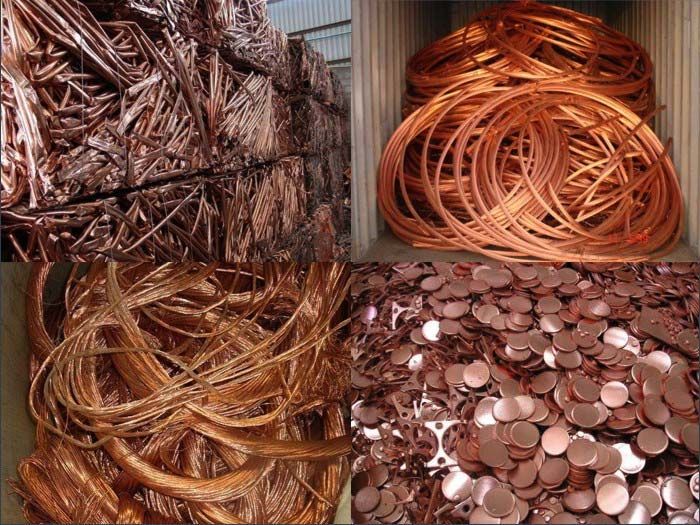
To qualify, the metal article must be manufactured in the United States. The question presented in this ruling is whether scrap metal collected from industrial production in the U.S. is "manufactured in the United States." The scrap metal at issue here is copper. The question is potentially complicated by the fact that some of the original copper was domestic in origin while some was originally foreign. Some of the scrap will be derived from production processes. Some will just be collected in the form of obsolete U.S-origin wire.

From exportindia.com


 The tariff does not define "manufactured" in this context. In prior rulings, CBP has held that metal is manufactured when it is subject to operations such as "splitting, annealing, milling, rolling, brushing, and leveling." Here, the industrial scap results from the application of those manufacturing processes to copper. As a result, Customs held that the scrap was also manufactured in the U.S.

Customs has also held that the process of making metal into U.S.-origin products is sufficient manufacturing to allow used, obsolete products to be considered manufactured in the U.S. [Note: I realize that seems self-evident, but that's the fact of the matter.]

Consequently, in this case, all of the goods, when re-entering the U.S. after further processing abroad, qualify for the partial duty exemption. There are, of course, documentation requirements. If you are going to try this, look at 19 C.F.R. 10.9.


| | | Devamı » 5 Şubat 2017 Pazar Unknown 0 yorum