Ruling of the Week 2017.6: Printers vs. Printing Machines

This one will be quick, for lots of reasons. Mostly, I don’t have much to add to the ruling other than a question. The ruling at issue is HQ H128416 (Feb. 9, 2017). It involves the tariff classification of digital wide-format ink-jet printer used to print and cut vinyl graphics for outdoor advertising and similar applications.

The printer is a combination of a printing machine and a cutting machine. As such, the competing tariff provisions are in Heading 8443 (Printing machinery) and 8477 (Machinery for working rubber or plastic). That is the sole question addressed in the ruling.


To resolve the classification, Customs and Border Protection applied Note 3 to Section XVI of the HTSUS, which states in relevant part:

Unless the context otherwise requires, composite machines consisting of two or more machines fitted together to form a whole and other machines designed for the purpose of performing two or more complementary or alternative functions are to be classified as if consisting only of that component or as being that machine which performs the principal function.

According to the importer, the principal function is printing, making the machine an article of 8433. Customs agreed, finding that the machine would not be used solely for cutting but that it might be used for printing without cutting. Customs examined the factors set out in United States v. Carborundum Co., 63 C.C.P.A 98, 536 F.2d 373 (1976), including physical characteristics, channels of trade, expectation of the ultimate purchaser, and recognition in the trade to ultimately agree that this machine is primarily a printer.

OK, so here’s my question: Why not consider this to be an 8471 unit of an automatic data processing machine? In other words, why is this ink-jet printer different than the ink-jet printer on my desk? The difference between 8471 printers and 8443 printing machines was discussed at length by the Court of International Trade in Xerox, which we reviewed here. The ruling states that these are “digital” printers. That means that they function in conjunction with a computer to translate digital data into signals to the printer. The only difference is that they print on large format plastic rather than on paper and they can cut the plastic. Once we determine that printing is the principal function, it seems to me that the cutting becomes irrelevant. What we know from Xerox is that large scale digital printing is still a data processing function. That would make these printers units of ADP machines of Heading 8471.


I am probably wrong for some factual reason not stated in the ruling. Heck, I may be wrong on the legal analysis. My analysis ends up with the potentially absurd result that all digital printers are ADP machines and 8443 printing machines would cover only Gutenberg-style presses and similar analog machines. It would be nice to know whether this was discussed and how it was decided that 8471 is not relevant.
| | | Devamı » 24 Şubat 2017 Cuma Unknown 0 yorum

Ruling of the Week 2016.21: Holy HoloLens!

Over the years, I have opined on the tariff classification of a number of gizmos that I think are probably computers. Often, Customs and Border Protection disagreed with me. Usually, this has to do with whether the particular item is "freely programmable" as opposed to having a specific and limited function. For example, here is a discussion on big industrial digital printers. Here is another on a music editing system and another on a smart watch. I also previously admitted to being a middle-aged Microsoft fanboy. So, this next post is right in my wheelhouse.

If you are not familiar with Microsoft's HoloLens, watch this video.


The imported merchandise is the Microsoft HoloLens and its associated "clicker" controller. HoloLens is a computer [spoiler]. It has a 32-bit processor, 2 GB RAM, 64 GB storage, a graphics processor, and Wi-Fi connectivity. Most important for our purposes, it runs Windows 10 and supports applications written for that environment. What distinguishes HoloLens from your laptop is that it sits on your head, includes sensors to track your position, and places three-dimensional stereo displays before your eyes. The result is that the user can be completely immersed in a virtual world or, perhaps even more exciting, in an augmented version of reality.

I can imagine an entirely feasible scenario of basic law office productivity using HoloLens. In that world, I sit at my desk or walk about my office with Word documents and Excel spreadsheets virtually pinned to my walls until I want them. I might have a 3-D virtual model of a client's product siting on my desk. The old practice of staring into a two-dimensional monitor that sits in a fixed location will be replaced by having the data you want, everywhere you want it. HoloLens and a Bluetooth keyboard for text entry might be the ultimate set up. With cellular connectivity, the headset could replace my main laptop, my tablet, my XBox, and my phone.

Don't get me wrong. I don't expect everyone in a law firm or other enterprise to spend the entire day in a HoloLens headset. I have not been in one, but I doubt they are that comfortable. I am just waxing poetic about the possibilities, not the practical realities. I leave that to those of you who have actual access to a HoloLens (or similar device). [Side note, T-Mobile recently announced it will be selling an Alcatel IDOL Windows Phone with VR goggles, which may be the entry way to VR for many of us.] I view HoloLens as the promise of something between the current headset design and the form factor of Google Glass. That is all the functionality of your phone and PC without ever reaching for a physical device.

So, what about the ruling? Oh, that. It is N273804 (Apr. 7, 2016). Customs noted that the primary function of the HoloLens is data processing. It is a general purpose device that allows users to access multiple applications, of their choosing, including mundane tasks like word processing and spreadsheets. Customs, therefore, had no problem concluding that it is a freely programmable automatic data processing machine. Customs classified it in 8471.41.0150, which is entirely correct.


| | | Devamı » 2 Kasım 2016 Çarşamba Unknown 0 yorum

Breaking News: Otter Products is Still Correct

You may know that one of the more closely watched appeals has been Otter Products, LLC v. United States in which the Court of International Trade previously overturned the tariff classification Customs and Border Protection assigned to covers for mobile devices. My original post on the case is here.

Customs classified the covers in HTSUS Heading 4202, which includes, among a large number of other things, suitcases, camera case, backpacks, and similar contains. The Court of International Trade held that mobile device covers are not "similar" to the exemplars listed in the heading and, therefore, could not be classified there. The principle reason supporting that conclusion was that none of the exemplars allow the user complete and functional access to the contents while in the container. To put it in colorful terms: I can't wear my socks when they are in a closed suitcase but I can use my device when it is in the OtterBox Commuter and Defender cases at issue. The alternative is to classify these products as "other articles of plastic" in Heading 3926. The applicable rates of duty are 20% for tariff item 4202.99.00 versus 5.3% for tariff item 3926.99.90.

The Federal Circuit has now affirmed. The decision is, in my opinion, close to perfect.

Looking to the legal text, the Court noted Chapter 39, Note 2(m), which states that Chapter 39 does not cover trunks, suitcases, handbags, and other containers of Heading 4202. That means that if the device covers are properly classified in 4202, they cannot be classified in 3926.

To fall within 4202, the covers must be "similar containers," meaning similar to trunks, suitcases, and other listed containers. To be fair, some of the listed containers are kinda, sorta similar to device cases including spectacle cases, tobacco pouches, and beverage bags. When trying to decide whether something is similar to the listed containers, the Court considers "the unifying characteristics" of the listed products and determined whether the imported item shares those characteristics and does not possess a "more specific primary purpose that is inconsistent with the listed exemplars." A number of prior decisions have identified the unifying characteristics of Heading 4202 as being the ability and purpose of "organizing, storing, protecting, and carrying various items."

Right out of the blocks [Metaphor alert: I must have recently watch too many hours of Olympic track.], the Federal Circuit determined that mobile device cases that provide continual, useful access to the enclosed device are not "containers" at all, let alone "similar containers." The point here is that the common definition of "container" includes examples of items such as boxes, crates, cans, and jars, all of which usually require some minimal effort on the part of the user to get to the enclosed item. The Court of International Trade noted that the device covers at issue, on the contrary, are designed to let the user get to and manipulate the device without opening the cover or removing the device. It is, however, easy enough to envision an open box, for example, permitting access and use of the enclosed item. Consequently, while important, neither the Federal Circuit nor the CIT ended its analysis with this point.

Next, the Court noted that the Commuter and Defender covers are not "similar" to the listed exemplars. Here, the real question was whether the test for "similar containers" required the container to have all four of the unifying characteristics or whether any one is enough. This was an open question and, in my view, a false dichotomy. The answer need not be one or the other in all cases. As the Federal Circuit eventually found, the proper analysis takes all the factors into consideration but applies them in the context of both the item to be classified and the text of Heading 4202. According to the decision:

We take this opportunity to clarify that there is no requirement that the subject merchandise meet all four characteristics to qualify as a “similar container” under Heading 4202.  Courts should consider the four characteristics collectively and then determine whether, in light of those considerations, the classification would lead to an inconsistency.  If, for example, an item met only one of the four characteristics, it almost certainly would not qualify as a “similar container” under Heading 4202.  Allowing a single factor to satisfy the inquiry would, in almost all conceivable scenarios, render the scope of “similar containers” so broad that it would lead to absurd results and make consistent application of the standard all but impossible.

Turning to those individual characteristics, the Federal Circuit first looked at whether the covers organize the devices. They do not. A phone on the table or in my pocket is just as organized as a phone in a case on a table or in my pocket.

Looking to "storage," the Court held that because the devices remain fully accessible and useable, the covers are not "storage" containers.

It was undisputed that the covers protect the devices.

Finally, the covers do not facilitate carrying the devices. The Court observed that, if anything, the device carries the case. Furthermore, when it comes to carrying the device, there is little difference between carrying the naked device and one in a cover. Thus, the covers do not "carry" the device.

The examination of the four factors did not end the analysis. The government argued that the CIT imposed an additional fifth factor that the item must be removed from use while in the container. The Federal Circuit disagreed. This was not a new factor. Rather, it was a recognition that the digital device covers have a characteristic and purpose that is inconsistent with the examples in 4202. That characteristic is that the enclosed device remains fully useable. That was not an error on the part of the CIT.

This is a really good decision, and not just for Otter Products. There are many importers with pending protests or summonses waiting for this decision. They should all be very happy. Moreover, this is an important decision because the Federal Circuit did not get tripped up by trying to create a simple black and white test composed of all four factors or of any one factor. Instead, the Court took a thoughtful approach to both interpreting Heading 4202 and applying that interpretation to the specific products at issue. It is possible to imagine a variety of mobile device covers that should properly stay in Heading 4202. They might have some sort of handle or a cover that needs to flip open to use the phone. By focusing on the particular items at issue, and recognizing that it is was not necessary to make one hard and fast rule for all possibilities, the Court avoided future problems and added clarity to the law.

Taking all of that into consideration, the Federal Circuit found the device covers to be classifiable in 3926 and affirmed the Court of International Trade.

A win is a win. A win that makes good law is even better. Congratulations to all involved. [Go ahead, click the link.]

| | Devamı » 24 Ağustos 2016 Çarşamba Unknown 0 yorum

Krill Oil, Cryptozoology, and Tariff Classification

Podcasts are a terrible thing if you expect to do work or read books while otherwise leading a productive life. Among the many I listen to somewhat regularly is Tetrapod Zoology, from which I learn all kinds of thing about both real and fanciful zoology. It's worth a listen, though it may be a bit of an acquired taste. I came to it through the side door. Co-host Darren Naish is an actual, credentialed scientist who is willing to talk about allegedly unidentified megafauna (e.g., the Loch Ness Monster, Yeti, and Bigfoot), not because they exist but because the notion that they might is entertaining. He and his co-host John Conway are fully comfortable trying to imagine how something as absurd as the Mongolian Death Worm might exist in the real world (because it does not).

Why I am on about this? Because I have been wracking by brain trying to think of puns involving krill and the baleen whales that eat them.

It turns out that people eat krill oil as a dietary supplement, which makes us share at least one thing with baleen whales. In Jedwards International, Inc. v. United States, the question presented to the U.S. Court of International Trade was the proper tariff classification of krill oil. The importer classified the merchandise in 1603.00.90 as "extract and juices of meat, fish or crustaceans . . . ." other than clam juice. This seems like a perfectly good description of the product, which, by the time it gets imported, contains nothing but natural components of the krill and a residual amount of ethanol from the production process. U.S. Customs and Border Protection disagreed and classified the merchandise in 3824.90.40 as a product of the chemical or allied industries, including several miscellaneous chemical products and preparation. To complicate matters, in Court, the plaintiff argued that the correct classification is as an animal fat or oil of Heading 1506 or 1517.

The Court easily eliminated Heading 3824, which is a basket provision for chemical products not elsewhere specified. Since the krill oil is described by at least one other heading, 3824 cannot apply.

To be classified in Chapter 15, the krill oil must be an "animal oil." This is where my limited knowledge of zoology might come in handy. I know, via Wikipedia, that krill are subject to the following taxonomical breakdown:

Kingdom:
Animalia
Phylum:
Arthropoda
Subphylum:
Crustacea
Class:
Malacostraca
Superorder:
Eucarida
Order:
Euphausiacea

From Wikipedia

I also know that creatures in the kingdom Animalia are, by definition, animals. So, this should not be an issue as far as science and the English language is concerned.

But, this is tariff classification we are discussing. In the tariff, an animal oil is defined as "esters of glycerol with fatty acids (such as palmitic, stearic and oleic acids)." This definition is apparently fairly consistent in the literature. The kind of fatty acid found in animal fats is chiefly of triglycerides and small amount of other stuff including free fatty acids.

It turns out that the krill oil is low in triglycerides (23%) and is mostly phospholipids (53%). Since the triglycerides do not predominate, krill oil is not animal oil, at least not according to the Court of International Trade. Despite the product being known commercially as an "oil." Advertising and marketing is evidence to be considered, but does not determine tariff classification.

Having excluded Heading 3824 and Chapter 15, the Court classified the merchandise in 1603.00.90 as an extract of crustaceans. Yummy.

This is one of those cases I tend to find frustrating. The Court relies heavily on the Explanatory Notes for a definition of "animal oils" as esters of glycerol, etc. But the term "animal oil" is not defined in the actual Harmonized Tariff Schedule. That means the Court has added a limitation to the scope of the term "animal oil" by relying, in part, on the Explanatory Notes. In this case, the Court noted that this limitation is consistent with scientific and other lexicographical sources. Consequently, I don't think there is a real problem here.

But, on principle, the Explanatory Notes, in my view, should not be elevated to nearly statutory authority unless there is some ambiguity and the available sources of common and commercial meaning have been exhausted. I HATE the fact that the Explanatory Notes are not available for free to the trade community. If the United States Government expects importers to always consult the Explanatory Notes, they should be available to importers just like the regulations, the tariff, and CBP rulings: free. I know that is not the majority view of the Explanatory Notes. Nevertheless, I think we should consult to the Explanatory Notes less often and with less deference, at least until they are made freely available.


| | | Devamı » 30 Mart 2016 Çarşamba Unknown 0 yorum

Ruling of the Week 2016.7: Microsoft Band

First things first, I admit that I am in the tank for Microsoft products. I have multiple Windows 10 computers and a Windows 10 tablet. I am also on my third Windows Phone. I stared with a Samsung Windows 7 device, moved to a Nokia Lumia 920, and now carry a Lumia 950, which I keep slightly ahead of the curve through the Insiders program. I recently got my hands briefly on a Surface Book, on which I have a serious crush. I also have most of my personal data in the Microsoft cloud via OneDrive and Office 365. I am, as you can see, all in on Windows. Nevertheless, I do not have a Microsoft Band fitness tracker.


Before we discuss why I have so far skipped the Microsoft Band, we should talk about its tariff classification. I raise this because Customs recently ruled on the question. According to HQ H265035 (Jan. 19, 2016), the Microsoft Band is classified in subheading 8517.62.00, HTSUS, as an apparatus for the transmission or reception of voice, images, or data . . . ." This is a good result for Microsoft because the duty rate is free. I have no intention of trying to muck that up here. Also, the analysis is entirely consistent with Customs' prior decision on a Samsung smart watch, which we analyzed here.

In a nutshell, Customs stated that the Band is a device comprised of multiple electronic components including a display, sensors for heartrate and acceleration, a GPS receiver, a Bluetooth transceiver, and a wrist watch. Given that no one HTSUS heading describes the product, Customs determined the proper classification under General Rule of Interpretation 3(b) based on the one component that imparts the essential character. Customs then found that the Bluetooth connectivity to a paired mobile phone enables many of the Band's functions. Unpaired, the Band has limited utility. Consequently, the Bluetooth transceiver imparts the essential character.

My minor complaints about the analysis remain minor and are well explained in the smart watch post. I will leave it at that.

That brings me back to why I do not yet own a Microsoft Band. The reason is that I currently own a relatively old but perfectly functional Polar C300 cycling watch. The watch uses a chest strap heart rate sensor and on-bike speed and cadence sensors to capture data. The Band would add GPS ride data, which would be great, but I can get that with a phone app and would lose cadence. Also, I have read that the Band's heart rate sensor records data less frequently than does the Polar HRM.

Here is what I want. Microsoft, if you could do me this favor, I would run out and buy a Band. Please add on-bike sensors to capture cadence and possibly a chest-strap for better heart rate data. The Band has Bluetooth, so wireless sensors should be possible. Then, I would gain GPS tracking, all the great connectivity features of the Band and not lose any cycling data. The alternative of a new Polar V800 seems a little excessive given that my current watch is working perfectly. Still, my birthday is coming up, so keep that in mind.


| | | | Devamı » 8 Mart 2016 Salı Unknown 0 yorum

Ruling of the Week 2015.23: How Smart is Your Watch?

Smart watches are cool new technology. Generally, I want cool new technology. I'm not so interested in a smart watch, at least not at the moment. One reason for this is that I am firmly commitment to my Windows Phone. I have little interest in a watch that requires me to have an iOS or Android phone. Microsoft does not sell a smartwatch, although its former partner Nokia was shopping one. I have some interest in a Microsoft band, which is supposed to have impressive utility for cycling. But, I hear there is a new version on the horizon, so I am waiting. That said, I am struggling to get my current bike computer (a Polar CS300) working. So, I am also kind of jonesing for a Polar M450. These are clearly my first world issues.

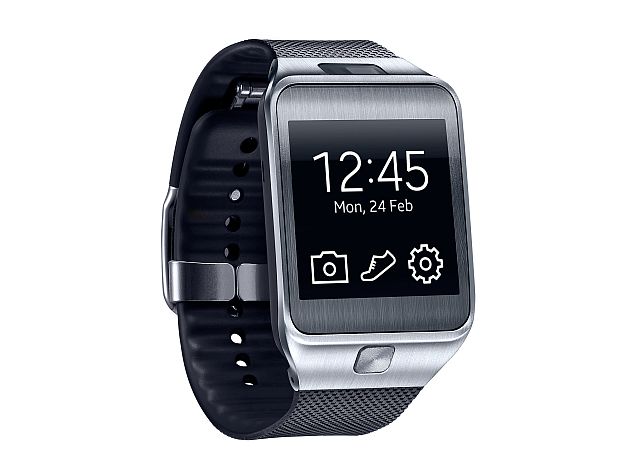
A more relevant consideration for this blog is the proper tariff treatment of a smartwatch. Customs recently settled the issue, at least with respect to a Samsung "Gear" Live Android smartwatch. See HQ H257947 (July 14, 2015).

The watch uses Bluetooth wireless technology to communicate with a paired smartphone and, therefore, to the internet. The user interacts with the watch through a touchscreen. There are two classes of application that can run on this particular smartphone. Some are local and run directly on the phone. Others require a connection to a paired phone. Paired applications require the phone to do the heavy data processing, network connectivity, and data storage. An unpaired watch is not able to perform these tasks beyond the limited data storage and processing capabilities of the watch itself. One such feature is the ability to display the time, as a watch really should do.

So, for classification purposes, is this a wrist watch of Heading 9102 or is it a composite good classifiable elsewhere? In the old days, we would have asked, "Is it more than a watch?" Or, is it something else entirely?

Customs and Border Protection initially determined that the Samsung smartwatch differs significantly from watches of 9102. Specifically, it includes electronic components not normally seen in watches including an AMOLED display, CPU, 512 MB of RAM, 4 GB of internal flash memory, and several sensors. Although this watch can display the time, it is designed to allow users to display and manipulate data. The fact that it is worn on the wrist and displays time is not enough to make it a watch.


Customs then constructively disassembled the watch to look at all of its components. It found a radio transceiver of 8517, sound recording and reproducing apparatus of 8519, a video display of 8521, and sensors of 9029 and 9031. Customs them treated the watch as a composite good consisting of all of these components. Based on GRI 3(b), the correct tariff classification for the watch would be the classification of the single component that imparts the essential character.

Essential character is a tricky concept. The item that imparts essential character will vary depending on the nature of the components, their value, quantity, bulk and role in the use of the finished item. Here, Customs found that the Bluetooth connectivity was of primary importance to the operation of the smartwatch. Consequently, Customs found that the radio transceiver imparts the essential character and classified the smartwartch in tariff item 8517.62.00. This is a duty-free provision.

It is a good result, but I have serious questions about whether it is right. What worries me about the analysis is the laptop on which I am currently typing. It has internal memory, a hard drive for storage, a CPU, a display, and can run applications written for its operating system. It also has Bluetooth and WiFi wireless capabilities. And, it is classified in 8471 as an automatic data processing machine, not as a radio transceiver.

I realize that the functionality of the smartwatch is extremely limited when not paired with a phone. That is not true of my laptop, but that is a matter of degree. My laptop is far more useful when connected to a network. Moreover, in the modern "cloud first" world, the location of the data and the processing capability is far less important than the ability to get to and use that data. To me, the watch is much more analogous to a "thin client" or "dumb terminal" than it is to a radio transceiver. Customs has previously classified thin client terminals, which rely on remote storage and data processing power, as units of ADP machines in Heading 8471. If I were classifying the smartwatches, I would give strong consideration to that analysis.

Here's the other thing that bugs me about this ruling. Customs was quick to dissect the watch into its components before trying to classify it as a whole. I think that would have lead to Heading 8471. We don't look at a passenger car and say it is part car, part radio/entertainment center, part air conditioner. We look at the whole thing and see if it is a passenger car. Here, the collection of devices form a coherent whole that is designed to allow for data input and manipulation. That's how I might address this.

The outcome is likely the same: duty free. So,this is not one of those things that is likely to get litigated. It is entirely theoretical and, therefore, perfect fodder for a blog post.


| | Devamı » 8 Ağustos 2015 Cumartesi Unknown 0 yorum

What is a Unit of an ADP System?

Digidesign Inc. v. US involves a perennial classification question of the digital world. At what point does a digital device that manipulates data and connects to a central processing unit become a unit of an automatic data processing system? This is important as we move toward the era of the "internet of things." To the extent the connected devices perform a specific function that is not strictly data processing, this case provides an answer. Spoiler: your internet connected refrigerator, toaster, or car is not an ADP machine.

In this case, the merchandise was two music editing systems. The decision provides a detailed description of both devices and how they work. For our purposes, just understand that they are physical consoles that translate the sound engineer's manipulation of switches, sliders, and knobs into digital effects. One unit accomplished that task by sending signals to a separate computer where the digital music file is housed. The other unit can do it internally.

The court had to deal with one housekeeping matter before deciding the classification. For one of the entries, the corresponding commercial invoice listed four products, none of which were subject to the protest or the complaint. The importer argued that the invoice contains an error that can be seen by looking at the corresponding value, which matches the value of the items at issue. The government argues that the invoice does not identify the product subject to the protest and complaint and, therefore, is not properly before the Court. The court agreed that it lacks subject-matter jurisdiction over the goods on that entry.

This raises a question or two. First, could the plaintiff have avoided this problem by including in the complaint the factual allegation that the invoice covered the subject merchandise but mis-described it? I think the answer to that is, yes. That would have created a factual issue to be resolved by documents or testimony. Second, should the court have given the plaintiff an opportunity to cure the defect by amending the complaint? I'm not sure about that. It is likely that the statute of limitations had passed to file the claim and the amendment may not relate back to the original filing date. The court has an obligation to dismiss any case not properly before it, so the burden is on the plaintiff to prove up jurisdiction. This seems like a harsh result in a circumstance where the entry documentation probably asserted the correct classification and CBP likely knows that the entry covered the merchandise in question.

The competing headings here are 8471, units of automatic data processing machines, and 8543, electrical machines having individual functions not elsewhere specified or included. Units of ADP machines in Heading 8471 are duty free. The relevant provision in Heading 8543 has a duty rate of 2.6% ad valorem.

The definition of an ADP machine is set out in Chapter 84, Note 5(B), which states:

Automatic data processing machines may be in the form of systems consisting of a variable number of separate units. Subject to paragraph (E) below, a unit is to be regarded as being a part of a complete system if it meets all of the following conditions:
(a) It is a kind solely or principally used in an automatic data processing system;
(b) It is connectable to the central processing unit either directly or through one or more other units; and
(c) It is able to accept or deliver data in a form (codes or signals) which can be used by the system.

The difficulty here is that Note 5(B) references Note 5(E), which says:

Machines performing a specific function other than data processing and incorporating or working in conjunction with an automatic data processing machine are to be classified in the headings appropriate to their respective functions or, failing that, in residual headings.

Looking to Note (E), the court first found that the merchandise at issue performed a function other than data processing. Both models include microphone pre-amp and room monitor functions, neither of which are ADP functions.

The question is whether the machines work in conjunction with an ADP machine. The tariff does not define what it means to "work in conjunction with." Turning to dictionaries, the court held that "working" means acting, doing, or functioning. "In conjunction," according to the court means "joined together for a common purpose." From that, the court concluded that these machines perform specific functions in conjunction with ADP machines. As such, they are precluded from classification in Heading 8471 by Chapter 84, Note 5(E). There being no other more specific Heading, the machines were properly classified in the residual Heading of Chapter 85. 
| | | Devamı » 3 Şubat 2015 Salı Unknown 0 yorum